 | |||
| |||

politikinewsaaa.blogspot.com,η Χρήσιμη Εφημερίδα,ΠΟΛΙΤΙΚΗ,POLITIKI,POLITIKI NEWSPAPER,politikinews,ΠΟΛΙΤΙΚΗ ΕΦΗΜΕΡΙΔΑ,"POLITIKI" news,news,"ΠΟΛΙΤΙΚΗ" Εφημερίδα,Ειδήσεις,Новости Греция, Nachrichten aus Griechenland, Nouvelles de la Grèce, أخبار من اليونان,, 來自希臘的消息 , ギリシャからのニュース, Новини з Греції, Notícias da Grécia, חדשות מיוון, Notizie dalla Grecia, Nyheter fra Hellas,


| |||
| |||
| |||
 | |||
We just published a new blog—please find the full text below. Translations coming soon.
How to Meet the European Union’s Ambitious Climate Mitigation Goals By Dora Iakova, Alfred Kammer, and James Roaf Last week, the President of the European Commission Ursula von der Leyen made an ambitious proposal. By 2030, the European Union would aim to reduce greenhouse gas emissions by at least 55 percent below their 1990 levels. And this is just an intermediate target. The final goal is for the EU to become climate neutral by 2050, as stated in the European Green Deal. These goals are appropriately ambitious, while also realistic and achievable. Climate change mitigation is not a luxury but a necessity if we want to avoid a climate crisis. To limit global warming to 1.5°C above pre-industrial levels—a level considered relatively safe by climate experts—the whole world would need to become climate neutral by 2050, and the EU is leading the way. The road ahead Implementing such a significant reduction in emissions will not be easy. It will require a major shift in the structure of the European economy toward greater reliance on renewable energy and higher energy efficiency. 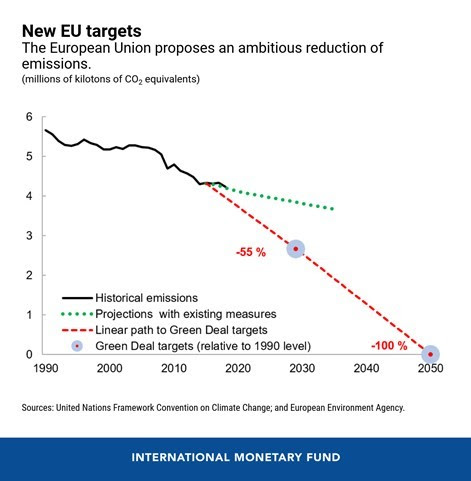
Two new IMF papers suggest that a carefully designed package of policies would allow the EU to achieve its emission goals while maintaining dynamic growth. With a careful sequencing, these policies would also support the economic recovery from the COVID-related recession. Climate-friendly growth strategy The unprecedented mobilization of public resources at the country and EU level to combat the crisis should be used to build an economy that is sustainable and more resilient. Prioritizing investments in green and digital technologies would lead to job-rich growth in the EU in the near term. As the recovery takes hold, a progressive increase in carbon prices would provide much-needed revenues while creating greater incentives to invest in clean technologies and energy efficiency. The strategy should include the following elements. A gradually increasing carbon price. A carbon price that covers all emissions and rises progressively over time is the most efficient mechanism to ensure that households and firms adjust their behavior to reduce emissions in a cost-effective way. Carbon pricing provides incentives both to reduce energy consumption and to shift to cleaner sources of energy. The EU’s Emissions Trading System has been successful in controlling emissions. But coverage, which is currently limited to power generation and large industries, should be expanded to all sectors. The predictability of the price signal can be strengthened by establishing a gradually rising price floor for emissions permits. The current low commodity prices also provide a good opportunity to phase out remaining fossil fuel subsidies and tax exemptions. Use carbon pricing revenues to support sustainable growth. The revenues could be used to reduce (or avoid increasing) labor and other distortionary taxes, stimulate productive green investment, and support those affected by the green transition. Our study shows that with an efficient use of resources, the economic cost of climate policies is very low even in the near term. Over the long run, the economic and health benefits in terms of lower pollution, better air quality, and avoided environmental damages far exceed any short-term costs. Put simply, the cost of inaction is much greater than the cost of action. Support green investments and targeted nonprice policies. Carbon pricing alone is not sufficient to rapidly decarbonize in some sectors, such as transport and buildings. Complementary policies are essential to address specific obstacles, including financing constraints, incomplete markets, and the availability of public goods. For example, governments can direct capital spending toward network infrastructure, including electric vehicle charging stations and power grids to support electrification and cleaner energy generation. They could also help promote innovation in emerging technologies, such as hydrogen generation and new methods for carbon capture and storage. Financing constraints for individuals and firms could be eased, for example, through low-cost financing for energy-efficient renovations of buildings. Other nonprice policies, such as feebates (a sliding scale of taxes and rebates on products linked to their emission rates), standards, and regulations also have an important role to play in specific areas. Ensure a just transition. Households and workers that are most adversely affected by the move away from carbon-intensive activities should be supported. For the green transformation to be successful, it has to be just and equitable. Support could include direct transfers to low-income households and training and job-placement help for workers. As the EU expands the coverage of carbon prices to more sectors, low-income member states most affected by higher prices on emissions would need to be supported as well. Prevent “carbon leakage” through global cooperation. The EU accounts for just 10 percent of global emissions and cannot stop global warming on its own. An agreement on a carbon pricing floor among major emitting countries would be the best way to reduce global emissions and prevent “carbon leakage” (shift of emissions-intensive production to countries with lower carbon prices). In the absence of such an agreement, leakage could be prevented by applying the same carbon prices to the same products irrespective of where they are produced. The recovery effort from the current crisis provides an opportunity to accelerate the shift to a greener, sustainable, and fairer economy. The EU is embracing this opportunity and we are confident that it can achieve its goals and demonstrate to the world the benefits of shifting to a low-carbon economic model. ***** Interested in more on this topic? Listen to IMF Managing Director Kristalina Georgieva talk about pursuing a green economic recovery. Thank you again for your interest in IMF Blog. Take good care,
|
ΤΜΗΜΑ ΔΗΜΟΣΙΩΝ ΣΧΕΣΕΩΝ / PUBLIC RELATIONS OFFICE
OIKONOMIKO ΠΑΝΕΠΙΣΤΗΜΙΟ ΑΘΗΝΩΝ / ATHENS UNIVERSITY OF ECONOMICS AND BUSINESS
Πατησίων 76, 104 34, Αθήνα / 76, Patission Street, Athens, 104 34, Greece
Τηλ./Tel. : +30 210 8203216, +30 210 8203218 +30 210 8203407
Φαξ / Fax : +30 210 8203483
E-mail : pr-office@aueb.gr
24Σεπτεμβρίου, 2020
Το πρώτο ευρωπαϊκό πρόγραμμα Train-the-Trainersστην Επιχειρηματικότητα
πραγματοποιήθηκε στο Οικονομικό Πανεπιστήμιο Αθηνών
Την Πέμπτη 17 και την Παρασκευή 18 Σεπτεμβρίου
2020 πραγματοποιήθηκε το πρώτο πρόγραμμα Train-the-Trainers στην
επιχειρηματικότητα για λογαριασμό της πρωτοβουλίας entreTimeτης Ευρωπαϊκής Επιτροπής.
Το πρόγραμμα
απευθύνεται κυρίως σε ΚαθηγητέςΠανεπιστημίωνσε όλη την Ευρώπη που
θα ήθελαν μέσα από τα μαθήματά τους σε οποιοδήποτε τομέα σπουδών να βοηθήσουν
τους συμμετέχοντες να αναπτύξουν δεξιότητες και έναν ανοικτό τρόπο σκέψης στην
επιχειρηματικότητα (EntrepreneurialCompetences).
Η συγκεκριμένη δράση όπως και αυτές που θα ακολουθήσουν αναμένεται να επηρεάσουν σημαντικά την εκπαίδευσηστην
Ευρώπη σε όλα τα επίπεδα τα επόμενα χρόνια.
Ακολουθώντας μια ξεχωριστή φιλοσοφία που θεωρεί την
επιχειρηματικότητα ως μια μοναδική παιδαγωγική μέθοδο διδασκαλίας («διδασκαλία
μέσω της επιχειρηματικότητας») το
πρώτο πιλοτικόTrain-the-Trainersπεριείχε
μία σειρά από ομιλίες, διαλέξεις και workshopsσχεδίασης καινοτόμων ιδεών και ανάπτυξης
επιχειρηματικού τρόπου σκέψης. Τη διεξαγωγή του προγράμματος στην Αθήνα
συντόνισε η ομάδα του Κέντρου Επιχειρηματικότητας και Καινοτομίας ACEinτου
Οικονομικού Πανεπιστημίου Αθηνών που συμμετέχει ενεργά στο πρόγραμμα entreTime.
Μεταξύ των συμμετεχόντων ήταν οι Αντιπρυτάνεις του Οικονομικού Πανεπιστημίου Αθηνών καθώς και καθηγητές και διευθυντές μεταπτυχιακών προγραμμάτων του ΟΠΑ και άλλων Πανεπιστημίων ανά την Ελλάδα. Το πρόγραμμα παρακολούθησαν με φυσική παρουσία 25 άτομα (βάσειπεριορισμών λόγω COVID-19), ενώ πολλοί άλλοι συμμετείχαν διαδικτυακά. Χαιρετισμό κατά την έναρξη του προγράμματος απεύθυνε η κα DanaAdrianaPuiaMorelως εκπρόσωπος της Ευρωπαϊκής Επιτροπής, τονίζοντας τη σημασία που έχει για όλη την Ευρώπη και την επίτευξη των στόχων της Πράσινης Συμφωνίας (GreenDeal) η ανάπτυξη επιχειρηματικού τρόπου σκέψης και δεξιοτήτων από όλους τους νέους.Επίσης, ο Καθηγητής Βασίλειος Βασδέκης, Αντιπρύτανης Ακαδημαϊκών Υποθέσεων και Προσωπικού του ΟΠΑ, εξέφρασε την πρόθεση του Ιδρύματος, ως μέλος του δικτύου entreTime, να υποστηρίξει ενεργά τη δράση αυτήπου στόχο έχει την ανάπτυξη επιχειρηματικών δεξιοτήτων στην τριτοβάθμια εκπαίδευση. Το διήμερο Train-the-Trainers υποστηρίζεται μεταξύ άλλων και από το πρόγραμμαHEInnovate και οι εισηγητές του είναι στο σύνολό τους μέλη-experts της επιτροπής HEInnovate.
Στοιχεία Επικοινωνίας
Κέντρο Στήριξης Επιχειρηματικότητας και Καινοτομίας (ACEin)
Οικονομικού Πανεπιστημίου Αθηνών
E-mail: acein@aueb.gr,
Τηλ. 210 8203827
Τι είναι το entreTime:
Το entreTime είναι μια νέα πρωτοβουλία εκπαίδευσης για την
επιχειρηματικότητα της Ευρωπαϊκής Επιτροπής. Η συγκεκριμένη υπηρεσία στοχεύει
στην αναβάθμιση των δεξιοτήτων και των παιδαγωγικών εργαλείων των εκπαιδευτικών
σε ιδρύματα τριτοβάθμιας εκπαίδευσης σε όλη την Ευρώπη, παρέχοντας ένα
ολοκληρωμένο πακέτο κατάρτισης.Υιοθετώντας την επιχειρηματικότητα ως μια
μοναδική παιδαγωγική μέθοδο διδασκαλίας («διδασκαλία μέσω της
επιχειρηματικότητας»), θα δημιουργηθεί και θα επικυρωθεί μια μοναδική
ακαδημαϊκή πλατφόρμα για τη διάδοση επιχειρηματικής διδασκαλίας και
συν-δημιουργίας μέσα στα επόμενα τρία χρόνια με τη συμμετοχή εκπαιδευτικών απ’
όλη την Ευρώπη.


| |||||||||||
|
Τετάρτη, 16 Σεπτέμβριος 2020
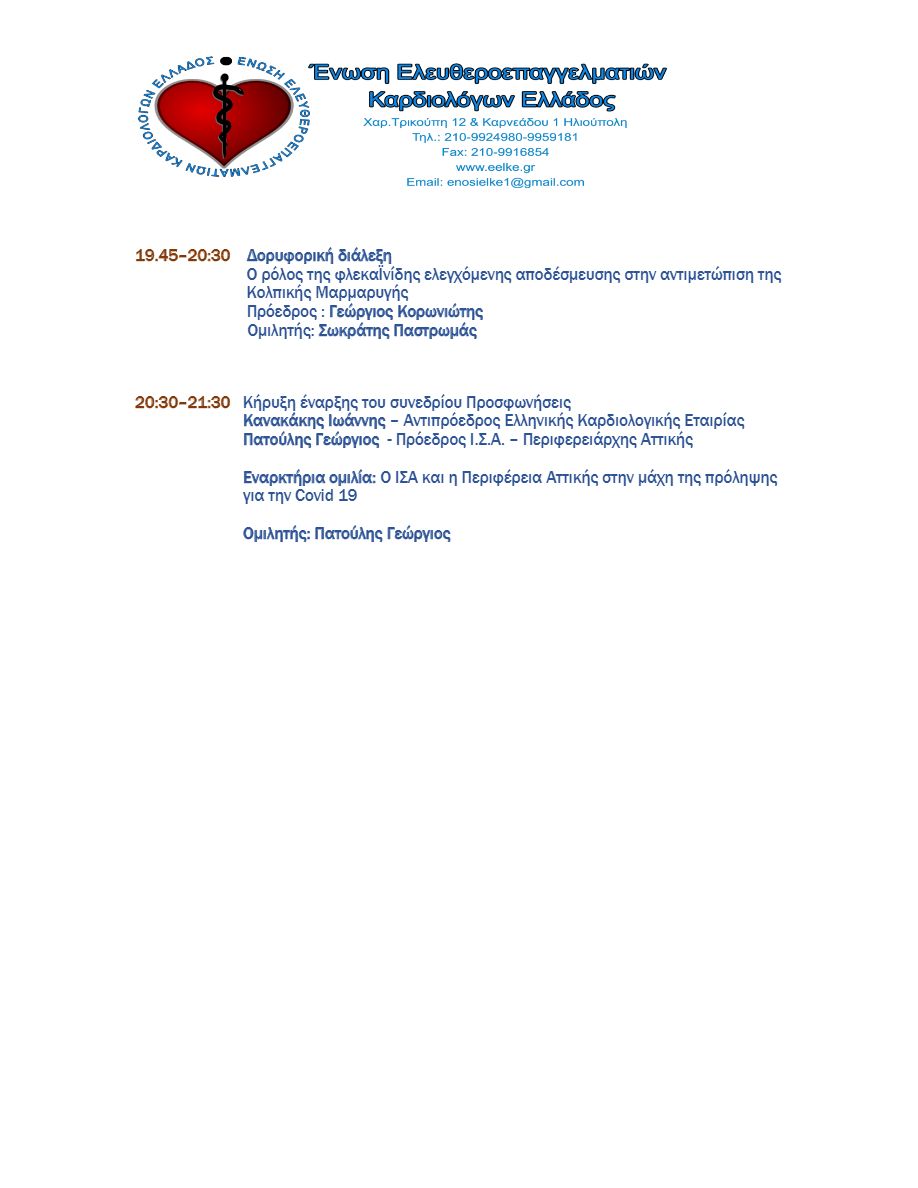
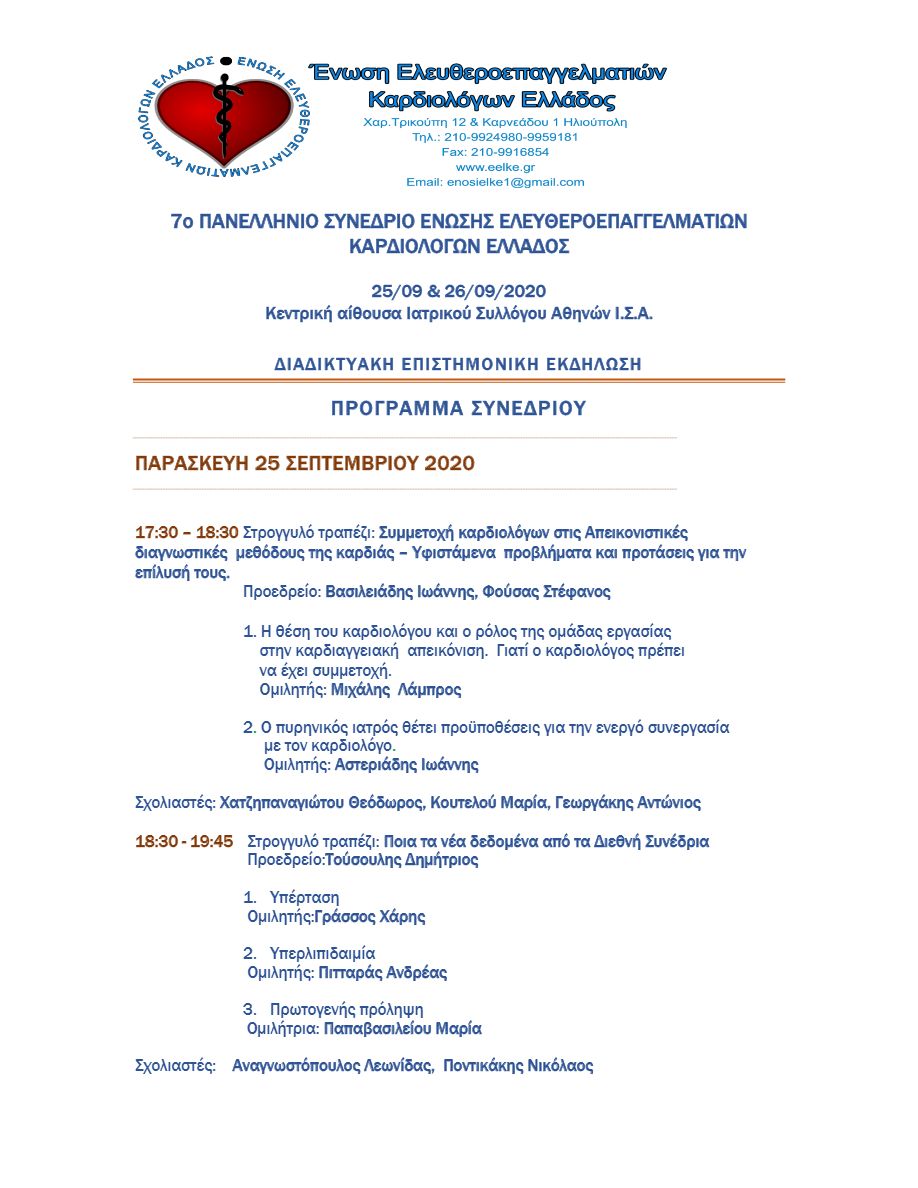
Ο Ευρωπαϊκός Οργανισμός Δημοσίου Δικαίου (EPLO) στο πλαίσιο της Ελληνικής Προεδρίας στο Συμβούλιο της Ευρώπης διοργανώνει μαζί με το Υπουργείο Εξωτερικών της Ελληνικής Δημοκρατίας και την Περιφέρεια Αττικής, Διεθνές Συνέδριο με θέμα “Η Eυρωπαϊκή έννοια του Κράτους ως “Δημόσια Υπηρεσία” και οι κρίσεις”. Το συνέδριο θα πραγματοποιηθεί την Τρίτη, 29 Σεπτεμβρίου, 2020 και μετά τα νέα μέτρα που έλαβε η Ελληνική Κυβέρνηση, το Συνέδριο θα πραγματοποιηθεί αποκλειστικά διαδικτυακά.
Το Συνέδριο θα πραγματοποιηθεί υπό την αιγίδα της Α.Ε. της Προέδρου της Ελληνικής Δημοκρατίας κ. Αικατερίνης Σακελλαροπούλου.
Για να παρακολουθήσετε την εκδήλωση εγγραφείτε εδώ: https://us02web.zoom.us/webinar/register/WN_pLbk-b47TqCYuI4dB8BFWw
πατήστε τα links για πλήρη πληροφόρηση
https://www.hazliseconomist.com/gr/press_release/2nd_Sustainability_Summit

2 Οκτωβρίου 2018
ΔΕΛΤΙΟ ΤΥΠΟΥ
Economist
2ο Συνέδριο για τη Βιωσιμότητα
στη ΝΑ Ευρώπη και τη Μεσόγειο
1-2 Οκτωβρίου 2018
Hilton Athens Hotel
Σε συνεργασία με το Sustainable Development Goals Center on Governance and Pubic Law,
μία κοινή πρωτοβουλία του Cambridge Institute for Sustainability Leadership (CISL), του European Public Law organization (EPLO) και του European Law and Governance School (ELGS) και με το UN SDSN Greece.
Αναλυτικό πρόγραμμα-Παρουσιάσεις:
www.hazliseconomist.com
www.sustainabilitysummit2018.ecomomist.com


