

.png)
EBRD latest news
https://www.ebrd.com/home/news-and-events/news/2025/rep-may-25.html
EBRD cuts growth forecasts amid surging trade policy uncertainty
13 May 2025
Author: Ksenia Yakustidi
This downward revision follows a similar 0.3 percentage point cut in February and reflects a confluence of global headwinds, as captured in the title of the new report, “Uncertain times”.
These include a sharp rise in trade and economic policy uncertainty, weaker external demand, and the direct and indirect effects of newly announced import tariff increases. As a result, most economies across the EBRD regions have seen their 2025 growth projections trimmed, with the largest downward revisions recorded in the Western Balkans, central Europe and the Baltic states.
“Although understanding the full macroeconomic effects of the newly announced tariffs will take time, it is already clear that our regions have entered a period of heightened uncertainty and slower growth,” explained Beata Javorcik, the EBRD’s Chief Economist. “Reducing trade tensions through constructive dialogue and achieving consensus on trade policy among key stakeholders are crucial, as prolonged uncertainty carries painful economic costs.”
Ukraine’s growth forecast for this year has been revised downwards by 0.2 percentage points to 3.3 per cent, due to weaker European Union (EU) demand and continued damage to energy infrastructure from Russian attacks....
read more:
https://www.ebrd.com/home/news-and-events/news/2025/rep-may-25.html
EBRD downgrades 2025 growth forecast for Poland
13 May 2025
Author: Nigina Mirbabaeva

EBRD revises down its Poland growth forecast to 3.3 per cent in 2025
Downward revision of 0.1 percentage point reflects increased global uncertainty and weaker external demand
Economy expected to grow by 3.2 per cent in 2026
The European Bank for Reconstruction and Development (EBRD) has revised down its GDP growth forecast for Poland to 3.3 per cent for 2025, from a forecast of 3.4 per cent in February 2025.
The change is based on a sharp rise in global uncertainty, the direct and indirect impact of new US tariffs and weaker external demand, particularly from Germany.
The Bank expects Poland’s economy to grow by 3.2 per cent in 2026.
The forecasts were published today in the EBRD’s Regional Economic Prospects report. It notes that Poland’s direct trade exposure to the United States is small and that the negative impact of the increased US import tariffs will be mostly indirect, primarily through Germany and supply linkages in the automotive sector.
While the outlook for Poland’s exports is highly uncertain, domestic demand is robust, and slowing inflation and rising real household incomes are expected to sustain private consumption. Accelerated investments, particularly in infrastructure and energy – co-financed by EU funds – as well as increased spending on defence are forecast to boost GDP growth in the short term.
Poland is not the only country to face lower growth expectations in 2025. The Bank has cut its forecasts across most economies and overall expects EBRD economies to grow by an average of 3.0 per cent this year, down from 3.2 per cent in its February 2025 forecast.
Growth is expected to pick up to 3.4 per cent in 2026, although this is also a downward revision of 0.1 percentage point from February forecasts.
The EBRD is among the leading institutional investors in Poland. Since the start of its operations in the country in 1991, the Bank has invested more than €16 billion in 560 projects. Last year the Bank invested a record €1.3 billion in Poland.
Ukraine’s GDP growth seen slowing slightly to 3.3 per cent in 2025
13 May 2025
Author: Vanora Bennett
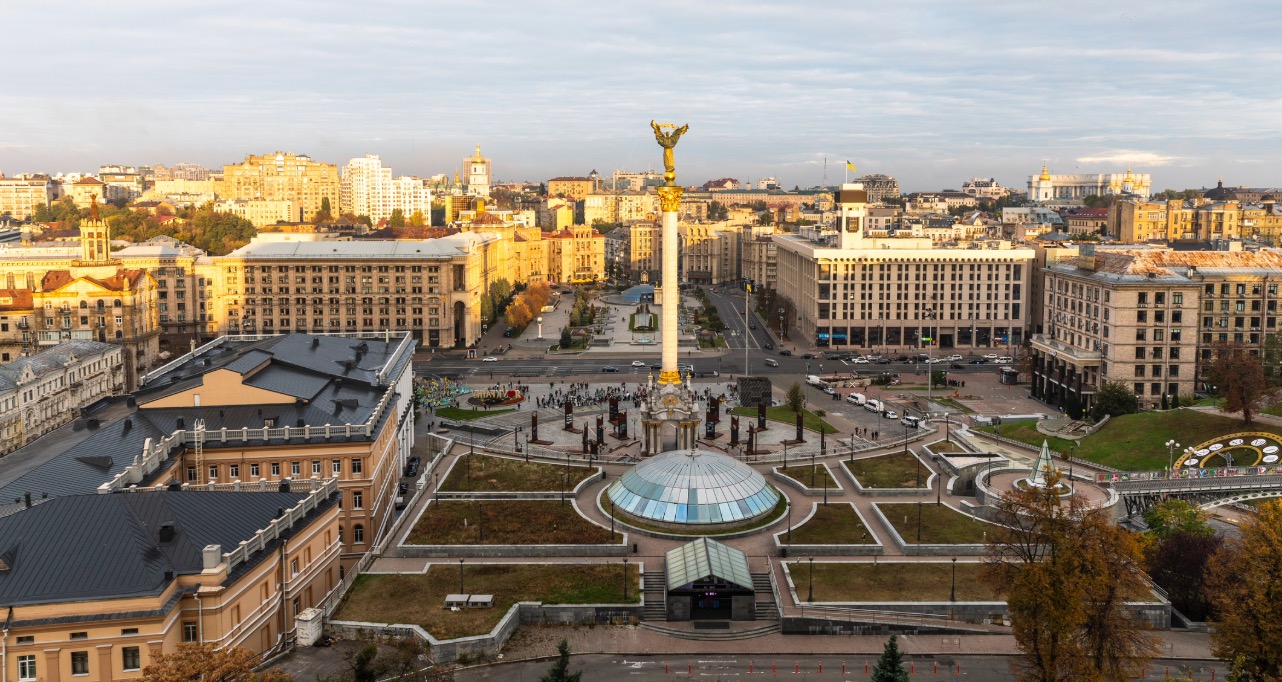
EBRD revises Ukraine 2025 growth forecast down to 3.3 per cent from 3.5 per cent
Global trade pressures as well as war weighing on 2025 economic expectations
EBRD forecast for 2026 unchanged at 5.0 per cent if fighting is suspended
Ukraine’s GDP growth is expected to slow to 3.3 per cent in 2025, with recent global trade frictions adding additional downside risks to already high uncertainty related to Russia’s war on the country, says the latest edition of a flagship economic report by the European Bank for Reconstruction and Development (EBRD). The previous report, in February, had forecast 3.5 per cent growth in 2025.
However, the EBRD’s Regional Economic Prospects (REP), published today, keeps its real GDP growth forecast for Ukraine in 2026 unchanged at 5 per cent, assuming a ceasefire and benefits from post-war reconstruction.
Across the EBRD regions – central and eastern Europe, Central Asia and the Southern and Eastern Mediterranean (SEMED) - average growth slowed from 3.4 per cent in 2022 to 2.7 per cent in 2023 and remained broadly stable at 2.8 per cent in 2024. But a sharp rise in trade and economic policy uncertainty in 2025, caused by increased global policy uncertainty, weaker external demand and the direct and indirect impact of announced increases in import tariffs, has prompted the EBRD to lower its regional May forecast for this year by 0.2 percentage points to an average of 3 per cent, before picking up next year to 3.4 per cent in 2026, unchanged from February.
Ukraine’s external financing to support its budget is secured for 2025, the report said. But it has seen a slowdown in economic growth, and accelerating inflation, since the middle of 2024 due to the impact of the war that began with the Russian invasion of February 2022.
Real GDP growth in 2024 slowed markedly from over 5.0 per cent in the first half of the year to around 2.0 per cent in the second half, bringing the overall figure down to 2.9 per cent. Causes included electricity shortages resulting from Russian attacks, weak harvests and acute labour shortages in the economy caused by the demands of the war.
While agriculture, energy production, and trade declined, other sectors exhibited solid growth despite challenging conditions and the war. Businesses demonstrated resilience and adaptability, which, coupled with the take-off during 2024 of Ukraine’s Black Sea trade corridor, led to the resumption of export growth after two years of sharp declines.
External financing remained at similar levels to those of 2023, covering the current account deficit and enabling Ukraine to maintain adequate official foreign reserves. Resurgent inflation in late 2024 was a consequence of rising electricity costs and high real wage increases. Ukraine unpegged its currency in October 2023, since when the hryvnya’s value has fallen about 10 per cent against the U.S. dollar.
Inflation stood at 14.6 per cent in March 2025 and is expected to stay elevated in the first half of 2025 but should fall to single digits by year-end. In response, the National Bank of Ukraine has raised its policy rate by a cumulative 250 basis points since December 2024, reaching 15.5 per cent in early March 2025.
Stable external financing from the EU under the Ukraine Facility and revenue from Russian frozen assets provided by G7 countries will fully cover external and fiscal deficits in 2025, underpinning macroeconomic stability. The strong stimulus from public consumption and increasing military purchases from domestic industry are expected to support economic growth.
The EBRD, Ukraine’s largest institutional investor, has significantly increased its support in response to the war. The Bank has made more than €7 billion available to Ukraine in the past three years, including €2.4 billion to the energy sector, supporting the real economy by its work on energy security, vital infrastructure, food security, trade and the private sector.
EBRD downgrades 2025 growth forecast for Poland
13 May 2025
Author: Nigina Mirbabaeva
EBRD revises down its Poland growth forecast to 3.3 per cent in 2025
Downward revision of 0.1 percentage point reflects increased global uncertainty and weaker external demand
Economy expected to grow by 3.2 per cent in 2026
The European Bank for Reconstruction and Development (EBRD) has revised down its GDP growth forecast for Poland to 3.3 per cent for 2025, from a forecast of 3.4 per cent in February 2025.
The change is based on a sharp rise in global uncertainty, the direct and indirect impact of new US tariffs and weaker external demand, particularly from Germany.
The Bank expects Poland’s economy to grow by 3.2 per cent in 2026.
The forecasts were published today in the EBRD’s Regional Economic Prospects report. It notes that Poland’s direct trade exposure to the United States is small and that the negative impact of the increased US import tariffs will be mostly indirect, primarily through Germany and supply linkages in the automotive sector.
While the outlook for Poland’s exports is highly uncertain, domestic demand is robust, and slowing inflation and rising real household incomes are expected to sustain private consumption. Accelerated investments, particularly in infrastructure and energy – co-financed by EU funds – as well as increased spending on defence are forecast to boost GDP growth in the short term.
Poland is not the only country to face lower growth expectations in 2025. The Bank has cut its forecasts across most economies and overall expects EBRD economies to grow by an average of 3.0 per cent this year, down from 3.2 per cent in its February 2025 forecast.
Growth is expected to pick up to 3.4 per cent in 2026, although this is also a downward revision of 0.1 percentage point from February forecasts.
The EBRD is among the leading institutional investors in Poland. Since the start of its operations in the country in 1991, the Bank has invested more than €16 billion in 560 projects. Last year the Bank invested a record €1.3 billion in Poland.
Ukraine’s GDP growth seen slowing slightly to 3.3 per cent in 2025
13 May 2025
Author: Vanora Bennett
EBRD revises Ukraine 2025 growth forecast down to 3.3 per cent from 3.5 per cent
Global trade pressures as well as war weighing on 2025 economic expectations
EBRD forecast for 2026 unchanged at 5.0 per cent if fighting is suspended
Ukraine’s GDP growth is expected to slow to 3.3 per cent in 2025, with recent global trade frictions adding additional downside risks to already high uncertainty related to Russia’s war on the country, says the latest edition of a flagship economic report by the European Bank for Reconstruction and Development (EBRD). The previous report, in February, had forecast 3.5 per cent growth in 2025.
However, the EBRD’s Regional Economic Prospects (REP), published today, keeps its real GDP growth forecast for Ukraine in 2026 unchanged at 5 per cent, assuming a ceasefire and benefits from post-war reconstruction.
Across the EBRD regions – central and eastern Europe, Central Asia and the Southern and Eastern Mediterranean (SEMED) - average growth slowed from 3.4 per cent in 2022 to 2.7 per cent in 2023 and remained broadly stable at 2.8 per cent in 2024. But a sharp rise in trade and economic policy uncertainty in 2025, caused by increased global policy uncertainty, weaker external demand and the direct and indirect impact of announced increases in import tariffs, has prompted the EBRD to lower its regional May forecast for this year by 0.2 percentage points to an average of 3 per cent, before picking up next year to 3.4 per cent in 2026, unchanged from February.
Ukraine’s external financing to support its budget is secured for 2025, the report said. But it has seen a slowdown in economic growth, and accelerating inflation, since the middle of 2024 due to the impact of the war that began with the Russian invasion of February 2022.
Real GDP growth in 2024 slowed markedly from over 5.0 per cent in the first half of the year to around 2.0 per cent in the second half, bringing the overall figure down to 2.9 per cent. Causes included electricity shortages resulting from Russian attacks, weak harvests and acute labour shortages in the economy caused by the demands of the war.
While agriculture, energy production, and trade declined, other sectors exhibited solid growth despite challenging conditions and the war. Businesses demonstrated resilience and adaptability, which, coupled with the take-off during 2024 of Ukraine’s Black Sea trade corridor, led to the resumption of export growth after two years of sharp declines.
External financing remained at similar levels to those of 2023, covering the current account deficit and enabling Ukraine to maintain adequate official foreign reserves. Resurgent inflation in late 2024 was a consequence of rising electricity costs and high real wage increases. Ukraine unpegged its currency in October 2023, since when the hryvnya’s value has fallen about 10 per cent against the U.S. dollar.
Inflation stood at 14.6 per cent in March 2025 and is expected to stay elevated in the first half of 2025 but should fall to single digits by year-end. In response, the National Bank of Ukraine has raised its policy rate by a cumulative 250 basis points since December 2024, reaching 15.5 per cent in early March 2025.
Stable external financing from the EU under the Ukraine Facility and revenue from Russian frozen assets provided by G7 countries will fully cover external and fiscal deficits in 2025, underpinning macroeconomic stability. The strong stimulus from public consumption and increasing military purchases from domestic industry are expected to support economic growth.
The EBRD, Ukraine’s largest institutional investor, has significantly increased its support in response to the war. The Bank has made more than €7 billion available to Ukraine in the past three years, including €2.4 billion to the energy sector, supporting the real economy by its work on energy security, vital infrastructure, food security, trade and the private sector.


Σχόλια
Δημοσίευση σχολίου
Eυπρόσδεκτα τα σχόλιά Σας...