
 |   | |
| European Climate Adaptation Newsletter | Issue December 1, 2023 | |
EU policy and EEA activities | Transnational, national, and local activities | Climate-ADAPT - new features | Research and assessments | Events | Subscribe | ||
| EU policies and EEA activities | |||
1. 2023 State of the Energy Union published The European Commission published its Climate Action Progress Reporting as part of the 2023 State of the Energy Union. Awareness of climate impacts has increased, and action on adaptation to climate change must accelerate as science and Member States’ reporting identify significant and growing vulnerabilities, for instance for agriculture, water management or energy sector. At the same time, the evaluation of adaptation policies at national level and their effectiveness in building resilience of communities, economic assets and nature to the increased impacts remains patchy. The Commission also published a Report on implementing the EU strategy on adaptation to climate change. << Read more on the State of the Energy Union report <<Read more on the 2023 EU adaptation Strategy progress report | 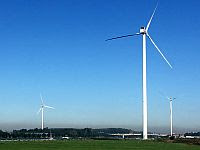 © Fokke de Jong | ||
2. Heatwaves, droughts, other extreme weather events increasingly influencing adaptation policies in Europe Climate risk assessments that take account of threats like heatwaves, droughts, floods and wildfires are increasingly used to inform and improve national adaptation policies, according to the second European Environment Agency (EEA) assessment of EU member states' national adaptation actions, The EEA briefing ‘Is Europe on track towards climate resilience? Status of reported national adaptation actions in 2023,’ presents the current state of play of national adaptation policies. It is underpinned by the findings of a technical paper developed by the European Topic Centre on Climate Change Adaptation (ETC.CA), and the information reported under the EU Governance Regulation (Article 17 and Article 19). << Read more |  © Raphael Quin - Well with Nature EEA/Eionet - Flickr | |
3. Commission funds 171 new LIFE projects in environment and climate across Europe with over €396 million The European Commission approved 171 new projects under the LIFE Programme for environment and climate action. The sub-programme climate change mitigation and adaptation is enriched with 34 projects (worth €110 million) to boost the implementation of the European Climate Law and the EU Strategy on Adaptation to Climate Change, for which the EU provides around €65 million.<< Read more |  © European Commission | |
4.Scaling nature-based solutions for climate resilience and nature restoration Nature-based solutions need to be scaled up to help Europe adapt to climate change. A European Environment Agency (EEA) briefing assesses the current state of such climate adaptation projects and how they can increase societal resilience and nature restoration, for example by restoring wetlands in flood-prone areas or green infrastructure to reduce heat island effects in cities. << Read more |  © Henrik Sørensen - Well with Nature EEA/Eionet - Flickr | |
5. Destination Earth - New web page informs on how a Digital Twin of the Earth will support climate change adaptation actions Destination Earth (DestinE) is a flagship initiative of the European Commission and a cornerstone to boost Europe's digital capabilities in support of actions addressing climate change impacts. The purpose is to model, monitor, and simulate natural phenomena, hazards, and related human activities. Destination Earth, implemented by ECMWF, ESA, and EUMETSAT, and governed by DG CNECT, is working on the creation of the digital twin of the Earth system with the first two thematic digital twins: Climate Change Adaptation and Weather-induced Extremes, due to launch as part of the DestinE system in the summer of 2024. Their ground-breaking interactive features will assist users in designing accurate and actionable adaptation strategies. This new website informs about the development process and timeline. << Read more |  © European Commission 2023 | |
6. EU Flood Risk area viewer published The European Commission published in October a new flood risk area viewer to raise awareness about potential significant flood risks. The viewer is provided with the support of the European Environment Agency and presents work carried out by the EU Member States under the EU Floods Directive. Users can zoom in to see which areas of potentially significant flood risk have been identified by each Member State. Member States themselves define what constitutes a significant flood risk. << Read more | 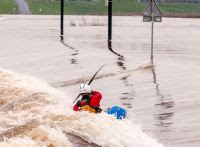 © Jos Zwaan - Unsplash.com | |
7. Annual update of EEA indicator on economic losses from weather- and climate-related extremes in Europe published Between 1980 and 2022, weather- and climate-related extremes caused economic losses of assets estimated at EUR 650 billion in the EU Member States, of which EUR 59.4 billion in 2021 and EUR 52.3 billion in 2022. Some statistical analysis revealed that economic losses are more likely to increase over time. As severe weather- and climate-related extreme events are expected to intensify further, it seems unlikely that the associated economic losses will reduce by 2030. A dashboard with more detailed insights into the information is available on Climate-ADAPT. |  © EEA | |
8. Knowledge exchange to build resilience: what cities can learn as they adapt to climate change Throughout the Covenant of Mayor’s Policy Support Facility (PSF) twinning programme, eight municipalities from Spain, Italy, Greece, France and Germany were paired together to offer the opportunity to exchange best practices, lessons learnt, and to evaluate what may be applicable in their city regarding developing adaptation strategies and building resilience to the adverse effects of climate change. << Read more |  © Gabriella Clare Marino - Unsplash.com | |
| Transnational, national, and local activities | ||
9. Germany steps up its effort in adapting to climate risks and impacts The OECD released in May 2023 the 4th Environmental Performance Review of Germany, which assesses the country's Adaptation Policy Framework, efforts to implement Nature-based solutions, and provides recommendations to strengthen resilience to climate change further. The report shows that, in the past two decades, Germany experienced many extreme weather events, including floods, storms, droughts and heatwaves, which significantly impacted on livelihoods, the environment and the economy. Therefore, Germany has scaled up its engagement on climate change adaptation across all government levels and initiated an ambitious programme to foster investments in nature-based solutions. << Read more |  © Harald Lueder and Heinz-Peter Schwerin - Shutterstock | |
10. The geography of future climate risk: Climate ranking of Norwegian municipalities The Norwegian Research Centre on Sustainable Climate Change Adaptation (NORADAPT) has developed all Norwegian municipalities’ first comprehensive climate ranking. Covering 12 indicators, NORADAPT has gathered data on expected climate and societal changes and compared these data with the municipalities’ actions to adapt to climate change. This provides a picture of the future total climate risk for Norwegian municipalities. << Read more | 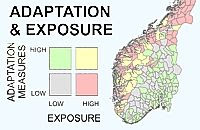 © Norsk Klimamonitor | |
11. Taming wildfires in the context of climate change: the case of Portugal The Organisation for Economic Co-operation and Development (OECD) launched a report that provides an overview of Portugal’s wildfire policies and practices. It also assesses how wildfire management in the country is evolving to adapt to growing wildfire risk under climate change. It complements the previous OECD report “Taming Wildfires in the Context of Climate Change”, which provides a global assessment and outlook. << Read more | 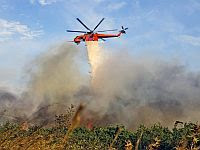 © Ihzan Ilse - Climate Change PIX EEA | |
| Climate-ADAPT – new features | ||
12. European Climate Data Explorer provides new data and functionalities The European Climate Data Explorer provides easy access to adaptation-related indicators from Copernicus Climate Services. It now includes indicators on heating and cooling degree days and extreme precipitation days. The functionality to download data for the regional level is now available. << Read more |  © EEA | |
13. New information on the process and outcome of the European Climate Risk Assessment (EUCRA) The European Climate Risk Assessment (EUCRA) will support identifying adaptation-related policy priorities and investments in EU policy development in climate-sensitive sectors. An update of the Climate-ADAPT EUCRA page shows the latest developments towards the publication of this key product of the EU Adaptation Strategy. << Read more | 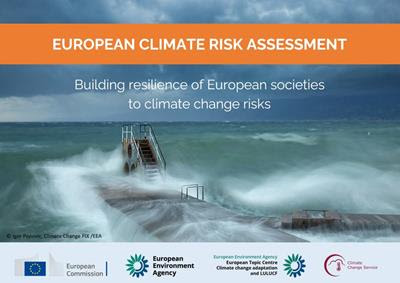 © Igor Popovic - Climate Change PIX/EEA | |
14. Climate-ADAPT country profiles offer updated information on national adaptation actions In March 2023, EU Member States complied with their second mandatory reporting of national adaptation actions under the Regulation on the Governance of the Energy Union and Climate Action, following the requirements of the first implementing regulation. The EEA member countries outside the EU were also encouraged to report on adaptation efforts voluntarily. Based on this 2023 governmental reporting, the Climate-ADAPT country profiles offer a structured overview of each country's adaptation actions with links to public submissions. << Read more |  © EEA | |
15. New interactive Dashboard on progress towards adaptation in the EU The Decarbonisation – Adaptation dashboard of the ‘Climate and Energy in EU’ online portal showcases country-specific information reported per EU Member State on adaptation goals in National energy and climate plans (NECPs) and information on adaptation which may affect the delivery of Energy Union objectives and targets and the long-term Union greenhouse gas emission reduction commitments under the Paris Agreement. It offers options to show and compare reported information among EU Member States. << Read more |  © Fokke de Jong | |
16. New type of case studies for improving enabling factors for adaptation
<< Read more |  © M. Bedaux | |
17. European Climate Health Observatory provides information and facts on selected water- and food-borne diseases Facts and figures about eight water- and food-borne diseases are now available on the Health Observatory website. The disease webpages include, among others, information on the transmission routes, health effects and the climate sensitivity of the diseases. << Read more |  © EEA | |
| Research and assessments | ||
18. Council gives the go-ahead to UK participation in the Horizon Europe and Copernicus programmes The European Council gave its green light to UK participation in the EU’s Horizon Europe and Copernicus programmes. As of 1 January 2024, researchers and organisations in the United Kingdom will be able to participate in the EU’s research and innovation programme Horizon Europe on equal terms with their counterparts in the EU. |  © European Commission | |
19. UNEP Adaptation Gap Report 2023 The Adaptation Gap Report of the United Nations Environment Programme (UNEP) looks at progress in planning, financing and implementing adaptation actions. The main finding for 2023 is that progress on climate adaptation is slowing when it should be accelerating to catch up with rising climate change impacts.
<< Read more | 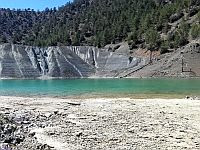 © Andreas Hadjipantelis Climate Change PIX EEA | |
20. Drought Risk Atlas with novel approach to assess drought risks and support drought management
<< Read more |  © JM Piquet - Unsplash.com | |
21. Most forests are less able to cope with hazards under climate change Climate change is weakening forests around the world. Increased climate variability and water shortages have made forests in warmer regions less able to recover from natural and anthropogenic disruptions. The study, led by the European Commission’s Joint Research Centre, provides new evidence of climate change’s effects on forests in Europe and worldwide. It stresses the need to adopt ‘resilience thinking’ – managing the environment for resilience – to solve forest management challenges in times of rapid climatic change. << Read more |  © Peter Loeffler | |
22. Severe drought: western Mediterranean faces low river flows and crop yields earlier than ever A new report by the EU Joint Research Centre (JRC)’s Copernicus Global Drought Observatory on drought in the western Mediterranean reveals the extent of the water shortage hitting the region. The severe drought reduces soil moisture and river flows, stunting plants and crops during their crucial growing season. << Read more |  © Universidad Polytechnica de Valencia | |
23. Increased dialogue between climate and health communities needed to act on climate change health impacts The urgency to act increases as the health effects of climate change are felt more and more in Europe. Health needs to be at the core of both adaptation and mitigation actions. That was a key take-away from a recent conference organized by the ENBEL project. The conference strengthened the cross-sector collaboration by bringing together climate change and health researchers, practitioners and decision-makers to protect people’s health and advance the European adaptation agenda << Read more | 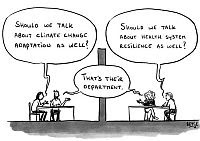 © Betje - ENBEL project | |
24. Policy Brief on integrating climate services into cities’ municipal planning Climate services have proven to be an important aid for informed decision-making on climate adaptation in Europe. However, a general concern is that climate services are unsuccessful in reaching the last mile toward user implementation. This policy brief from the EU-funded REACHOUT project shares results on co-developing knowledge and information, packaged as climate services and tools that support climate resilient urban development. << Read more |  © REACHOUT project | |
25. Climate Risk Sourcebook published Funded by Germany's Federal Ministry for the Environment, Nature Conservation, Nuclear Safety and Consumer Protection (BMUV) and Federal Ministry for Economic Cooperation and Development (BMZ), a new version of the Climate Risk Sourcebook (CR-SB), developed by Eurac’s Research Center for Climate Change and Transformation together with GIZ, UNU-EHS, GeoSphere Austria and IIASA, was launched during the Adaptation Futures 2023 Conference. The book delivers a conceptual framework for a comprehensive Climate Risk Assessment (CRA) and modular instructions, divided into eight modules. The guidelines were updated to be consistent with the most recent IPCC report (AR6), introducing external risk drivers, impact/risk cascades and systemic risks, and a new chapter on how CRAs inform Climate Risk Management (CRM). << Read more |  © German Development Cooperation | |
26. Innovative storylines approach to cross-border climate change affecting Europe The H2020 project RECEIPT studied the cascading impacts of climate change outside Europe on key socio-economic sectors of the European Union. The project has developed storylines unveiling cause-and-effect relationships over time and summarized actionable recommendations for decision-makers in 5 policy briefs on how the European Union can protect itself from remote climate change impacts. << Read more |  © RECEIPT | |
| Events |
<< Read more
<< Read more
| ||
| Subscribe |
If you do not receive your own copy of this newsletter, you can subscribe here. Please make sure you select "Climate change adaptation" from the list of thematic categories. | ||
