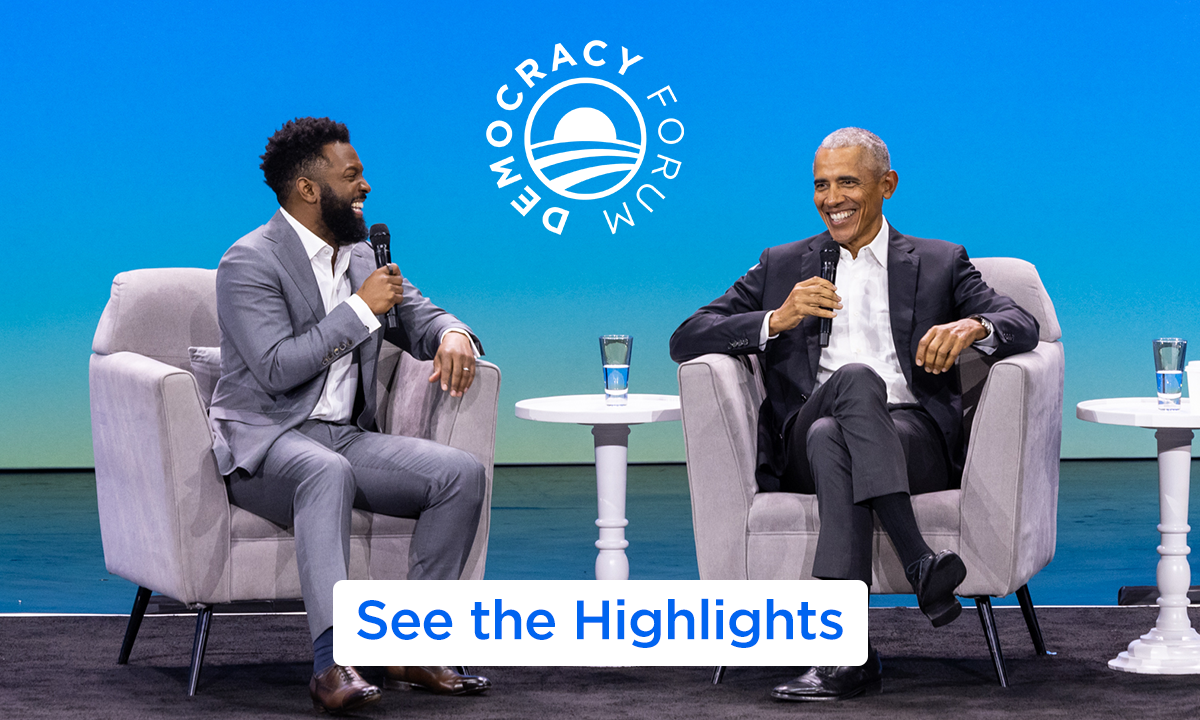
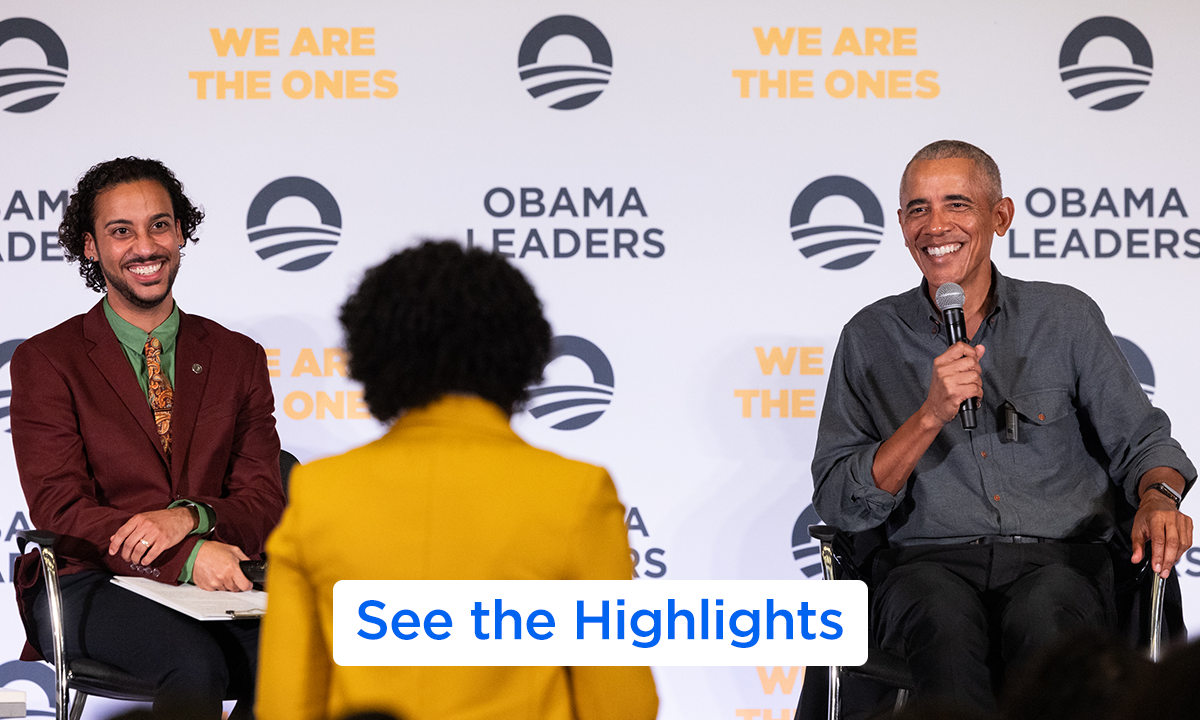
Hi there, Did you see President Obama’s email? He was in Chicago last week meeting with emerging leaders across our programs, celebrating the 15th anniversary of the 2008 election, and delivering remarks at this year’s Democracy Forum. We’re working to bring President Obama’s legacy to life—from building the Obama Presidential Center to finding solutions to some of our most pressing challenges—but we can’t do it alone. Please, make a contribution now to support our mission and help us continue this critical work. |
|
Begin forwarded message: ---------- Forwarded message --------- From: Barack Obama < info@email.obama.org> Date: Thu, November 9, 2023 at 2:28 PM Subject: The work ahead |
|
Hi there,
Right now, a lot of folks are feeling uncertain about the future. The gap between the wealthiest and everyone else is growing wider. AI is poised to transform the way we do just about everything. And changing populations are creating challenges for developing and advanced economies alike.
Solving these challenges will take a lot of work from a lot of people. That’s why we brought together hundreds of leaders from around the world at our Democracy Forum last week to chart a path forward on a whole host of issues – including how to create an economy that works for everyone. |
|
Over the last year, we spent time talking to leaders in our network and experts from outside the Foundation about how to create an economy that is more sustainable and more inclusive – one that strengthens democracy instead of weakens it.
Here are some of the ways they’re thinking about the work ahead: - Support workers more, not less. Over the last year, we’ve seen successful strikes by everyone from Hollywood writers to health care and auto workers. Now we need to address factors that make it harder to join a union. Unions need to adapt to reach the 100 million workers who aren’t unionized and they need to be more responsive to their members on everything workers care about, including educational advancement, childcare, and the impact of new technology.
- Build a stronger safety net. As technology reduces the number of hours people need to work, we should explore ideas like universal basic income and guaranteed income that give people who don’t have paid work the time and space to find a new purpose. We should also look into a shorter work week so more people experience the dignity that comes with work.
- Look at a new cross-border tax and regulatory regime. If we’re going to change the social safety net, we’re going to have to pay for it with taxes – not just on income, but also on wealth and on corporations. Tax avoidance has become rampant, in part because it’s easy for those corporations and individuals to move their money overseas. Fixing this problem will require global cooperation.
- Focus on sustainable growth. Even if we could magically create a system where everybody has what the wealthiest have right now, science has shown that the planet couldn’t take it. The good news is that innovation has driven the price of clean energy down in a pretty remarkable way. Now we need to encourage both more private investment and faster adoption and transition to clean energy.
- Reimagine corporate responsibility. We need to change the mindset that the only responsibility a corporation has is to increase shareholder value. That’s a bankrupt idea. The truth is that lots of other things – workers, communities, the planet – matter, too. And not just to society at large. They actually matter to companies themselves.
It’s up to all of us to grapple with these issues. And it’s the next generation in particular – including the young people I met at the Democracy Forum – whose ideas and energy we need. |
|
|