Σελίδες

Πέμπτη 9 Μαρτίου 2023

IMF:How to Close Gender Gaps and Grow the Global Economy


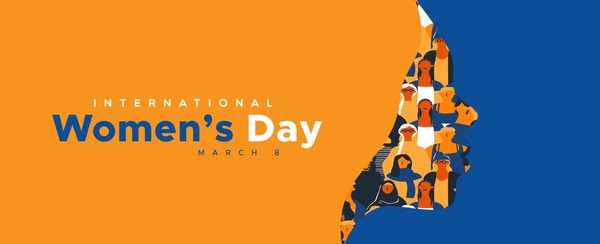
Women's day

How to Close Gender Gaps and Grow the Global Economy

Gender equality has come a long way since International Women’s Day was first recognized by the United Nations in 1977, but recent global shocks have stalled and even reversed progress in some countries.

IMF research has consistently underscored the benefits of equality, including higher economic growth and greater stability. To mark this International Women’s Day, we present a roundup of our most recent articles, blogs, podcasts and videos on gender and women in economics.


Credit: bestfromeast/iStock by Getty Images

How to Close Gender Gaps and Grow the Global Economy

Too many women are locked out of economic opportunities, which is not only unfair but also harms growth and resilience for all, the IMF’s Managing Director Kristalina Georgieva, Deputy Managing Director Antoinette M. Sayeh, and Senior Advisor on Gender Ratna Sahay write in a blog.


CREDIT: RYZHI | ISTOCK

The Digital Gender Gap

The advent of digital financial services—such as those that use mobile phones or the internet to conduct financial transactions—is transforming people’s lives. In an article for F&D magazine, IMF economists write that women continue to be significantly underrepresented in both finance and technology.


CREDIT: GERALT/PIXABAY

The New Economics of Fertility

Fertility in high-income countries has been declining for a hundred years, with few exceptions, and it is now extraordinarily low in many areas. In an article for F&D magazine, four leading economists write that people and economies will prosper if policymakers help women combine career and family.


Credit:Istockphoto guenterguni

Katharine Christopherson on Legal Barriers to Women’s Economic Empowerment

When women begin to participate more in the economy, good things happen. So why is women’s labor force participation still so low in so many countries? In this podcast, the Assistant General Counsel of the IMF’s Legal Department discusses the outdated laws that hold women back and what drives countries to reform them.


CREDIT: BY SVETAZI | ADOBE STOCK

Gender Discrimination in Economics

Gender discrimination and the associated biases and barriers to career advancement are unwelcome realities for many working women—and the economics profession is no exception. Ann Mari May’s compelling and well-researched book, Gender and the Dismal Science, offers a rich historical narrative on the long-standing sources of such gender gaps.

With too many women facing barriers to economic opportunities, the world is missing out on higher economic growth and resilience for all. IMF Managing Director Kristalina Georgieva, Melinda Gates of the Bill & Melinda Gates Foundation, Nigeria’s Minister of Finance the Zainab Ahmed, and UN-Women’s Sima Sami Bahous discuss how to reduce gender gaps.

Women in Economics

Embrace Debate

3

Karnit Flug talks to F&D magazine about the importance of central bank accountability and transparency, and her own personal progression from research economist to the first female governor of Israel’s central bank. “Sometimes being the only woman in a room with 35 or 40 male governors was a little intimidating,” she says.


Betsey Stevenson on Work-Life Balance

1

We often think about the economy as being driven by how productive we are on the job, but the pandemic made it clear that our personal lives and our work lives are in fact deeply linked. In this podcast, University of Michigan economics professor Betsey Stevenson says greedy jobs often force women to choose between their families or their careers.


Seema Jayachandran on How Changing Attitudes Can Change Lives

2

The professor of economics at Princeton University says economic progress improves lives, but can also clash with some of the bigger development problems we face, like gender equality and the environment.


Emi Nakamura on Questioning Assumptions

4

F&D magazine profiles the professor of economics at the University of California, Berkeley, best known for investigating macroeconomic questions using micro data—data that provide information about characteristics of individual people, households, and businesses.


Stefanie Stantcheva on Getting into People’s Heads

6

F&D magazine profiles the Harvard economics professor who uses surveys and experiments to uncover the invisible in traditional economic data. She has been able to get a glimpse into why people support some policies and not others, on issues ranging from redistribution to trade to environmental taxes.


Melissa Dell on Going the Distance

8

The Harvard economics professor pioneered new ways of unmasking legacies of the past. One of her most-cited articles, “The Persistent Effects of Peru’s Mining Mita,” figured prominently in the American Economic Association’s decision in 2020 to give her the John Bates Clark Medal, awarded each year to an outstanding economist under the age of 40.

Thank you again for your interest in this special International Women's Day Roundup! Be sure to let us know what issues and trends we should have on our radar.

Nick Owen

Nick Owen

Editor
IMF Newsletter
nowen@IMF.org