
 |   | |
| European Climate Adaptation Newsletter | Issue June 1, 2022 | |
EU policy and EEA activities | Climate and Health Observatory|Climate-ADAPT | Research and assessments | Transnational, national and local | Events | Subscribe | ||
| EU policies and EEA activities | |||
1. IPCC report: ‘Climate Change 2022: Mitigation of Climate Change’ — Summary for Policymakers The Summary for Policymakers (released on 4 April 2022) presents the key findings of the Working Group III Report, as a contribution to the Sixth Assessment Report of the IPCC. The Working Group III Report provides an updated global assessment of progress in climate change mitigation and related pledges and examines the sources of global emissions. A new chapter on innovation, technology development and transfer can contribute to and achieve both mitigation and adaptation targets, along with broader sustainable development goals. << Read more |  © IPCC | ||
2. European Commission invites regions and communities to join the Mission on Adaptation to Climate Change The Mission on Adaptation to Climate Change’s objective is to support 150 regions and communities to accelerate their transformation towards climate resilience by 2030. A survey is available for regions and communities to express their interest in joining the Mission. Once replies to the survey have been analysed, regions and communities that demonstrate commitment to adaptation will be invited to sign a Mission Charter. The first signatories to the Mission Charter will be announced at the first Mission Forum on 7 June 2022. << Read more |  © European Commission | |
3. New funding opportunities to support research projects on adaptation to climate change Under the Horizon Europe Work Programme 2021-2022, six new calls will contribute to the implementation of the Mission on Adaptation to Climate Change. The calls will close on 27 September 2022. << Read more |  © European Commission | |
4. Green Deal: EU invests over €110 million in LIFE projects for environment and climate in 11 EU countries The European Commission announced an investment of over €110 million in LIFE programme integrated projects for environmental and climate protection. The funding will support major new environmental and climate projects in 11 EU countries: Cyprus, Czechia, Denmark, Estonia, Finland, France, Latvia, Lithuania, the Netherlands, Poland and Slovenia. The projects contribute to a green recovery from the Covid-19 pandemic and support the European Green Deal's objectives of making the EU climate neutral and pollution free by 2050. << Read more
|  © LIFE programme | |
5. Green Deal: New LIFE call for proposal offers fresh funding for adaptation projects On 17 May 2022, the European Commission published this year’s calls for proposals under the LIFE programme, opening a new application round for funding. Altogether, just under €600 million is available for nature conservation, environmental protection, climate action and clean energy transition projects. Depending on the types of project, the deadline to apply is either 8 September or 4 October 2022. << Read more |  © LIFE programme | |
6. European State of the Climate 2021 The European State of the Climate (ESOTC) is an annual report compiled by the Copernicus Climate Change Service (C3S), implemented by the European Centre for Medium-Range Weather Forecasts (ECMWF) on behalf of the European Commission. Through a short overview of the global context in 2021, the ESOTC presents a more comprehensive overview of climate conditions and key events in Europe and focuses on the Arctic. << Read more |  © Ron Lach / Pexels.com | |
7. New European scientific advisory board on climate change appointed The members of the new European Scientific Advisory Board on Climate Change have been appointed, and this independent body can now provide the EU with scientific knowledge, expertise and advice relating to climate change, climate change impacts and adaptation. The Advisory Board’s work will underpin the EU’s climate action and efforts to reach climate neutrality by 2050. << Read more | 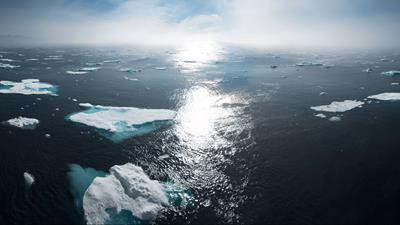 © William Bossen on Unsplash | |
8. EU Support to tourism — need for a fresh strategic orientation and a better funding approach The European Court of Auditors’ report ‘EU Support to tourism — need for a fresh strategic orientation and a better funding approach’ is meant to provide input for the Commission’s work in defining a comprehensive 2030 tourism strategy with medium- and long-term objectives. In this regard, sustainable tourism is one of the most prominent concepts in tourism development and involves environmental, economic and socio-cultural aspects to address the effects of tourism on climate change and to cope with the impacts of climate change on the tourism sector. << Read more |  © Samuel Theo Manat Silitonga / Pexels.com | |
| European Climate and Health Observatory | ||
9. Ten key heat health messages from the IPCC AR6 report The Working Group II contribution to the IPCC’s Sixth Assessment Report — Climate Change 2022: Impacts, Adaptation and Vulnerability — released on 28 February 2022, includes important messages about current and future impacts of extreme heat on human health. << Read more |  © Maija Malnaca | |
10. Global warming projected to increase health burden from hyponatremia Global warming is likely to increase the number of people requiring hospitalisation due to critically low sodium levels in the blood, a condition known as hyponatremia. A new study projects that a temperature rise of 2°C Celsius would increase the burden on hospitals from hyponatremia by almost 14%. << Read more |  © Fokke de Jong | |
11. Health as a lever for action on climate change During the French presidency of the Council of the European Union, Santé publique France and The International Association of National Public Health Institutes (IANPHI) organised a discussion day on climate change and public health on 8 April 2022. The event aimed to raise better awareness of the interlinkages between climate, biodiversity and health in public policies, and to encourage concrete actions at the local, national and European level to adapt to climate change. << Read more |  | |
12. New content on the European Climate and Health Observatory In the first months of 2022, new climate and health materials — such as an analysis of key climate impacts on human health in national policy documents; European health policies and activities; evidence review of the impacts of climate change on mental health; and updated indicators on health — were published in the Observatory webpage. << Read more |  © European Commission/EEA | |
| Climate-ADAPT – new features | ||
13. ECCA outcomes more easily accessible on Climate-ADAPT The findings of five biennial European Climate Change Adaptation (ECCA) conferences, funded by European Union Research and Innovation Framework Programmes, have been made more easily accessible on Climate-ADAPT. This also includes access to projects in the 2021 ECCA library. << Read more |  © European Commission | |
14. Case study published: building fire resilience using recycled water in Riba-Roja de Túria, Spain This case study aims to increase fire resilience in the Túria Natural Park area in Valencia (Spain) by applying sustainable water management principles. More than 35 hectares of ‘strategic nature’ are planned to be managed to prevent fires at the urban-rural interface. The use of recycled water for fire extinction will help in preserving water resources in future. << Read more |  © The Guardian project | |
<< Read more |  © European Commission/EEA | |
16. New storylines available on how to use Climate-ADAPT Funded by DG CLIMA and managed by the EEA, Ecologic Institute, developed a series of five Climate-ADAPT storylines to visualise how on Climate-ADAPT can be navigated to quickly find knowledge and guidance for various needs of policy advisors and practitioners. << Read more |  © European Commission/Ecologic Institute | |
| Research and assessments | ||
17. Copernicus Climate Change Service data supports research and policymaking throughout 2021 The Copernicus Climate Change Service (C3S) generated a wide range of authoritative, quality-controlled information and datasets about the state of the climate in support of scientific research and climate change mitigation and adaptation strategies carried out by policy makers and businesses. C3S released its annual findings showing that, globally, the last 7 years were the seven warmest on record by a clear margin, with Europe experiencing its warmest summer on record. << Read more |  © Copernicus C3S | |
18. Climate services guide: approaches and good practice from the European Research Area for Climate Services projects This guide to climate services presents projects funded under the European Research Area for Climate Services (ERA4CS), a co-funded action initiated by the JPI Climate programme with co-funding by the European Union, national public Research Funding Organisations (RFOs) and Research Performing Organisations (RPOs) from 18 European countries. It sets out to increase understanding of different pathways, methods and approaches to improve knowledge co-production in the area of climate services. << Read more |  © ERA4CS programme | |
19. Recording of Interactive Atlas Webinar with focus on Europe now available The IPCC Task Group on Data Support for Climate Change Assessments (TG-Data), together with the Data Distribution Centre (DDC), organised a webinar series focused on using the IPCC Working Group I Interactive Atlas. On 18 March 2022, a training session webinar for Europe was held. << Read more
|  © IPCC | |
20. Towards stronger and more accountable EU-wide disaster risk management Around the world, the 192 National Red Cross and Red Crescent Societies are key players in working to prevent, lessen the impacts of, and respond to all kinds of crises and disasters. A Red Cross article explains the key aspects of accountability in disaster risk management and ways to further increase it. Greater accountability requires investment in many areas, including cooperation, coordination, local capacities and continuous community involvement. These aspects are also critical to creating a more climate resilient society in the EU, aided by the Union Civil Protection Mechanism. << Read more |  © Wageningen UR | |
21. Bulletins of the European observatory on disaster risk and crisis management best practices Project: 4th bulletin on ‘Management of the floods and landslides risk’ The fourth bulletin of the euROpean observAtory on Disaster risk and crisis MAnagement best Practices (ROADMAP) focuses on floods and landslides. They have the potential for severe and even disastrous consequences with fatalities, diseases, and construction and infrastructure failures, and can damage or completely destroy vast areas of a country. According to the IPCC, both the probability and the consequences of floods and landslides are expected to increase in the coming decades, as a result of climate change and increased vulnerabilities and exposure, especially in urban areas. << Read more |  © ROADMAP project | |
22. Urban climate adaptation: what tools could accelerate the uptake of nature-based solutions in cities? As part of the Adaptive Cities Through integrated Nature-based Solutions (ACT on NbS) project, funded by EIT-Climate KIC, researchers at Wageningen University & Research, Deltares and the University of Bologna, assessed the different challenges that cities experience in urban NbS implementation. They conducted structured interviews and workshops with municipalities and reviewed available tools that support NbS uptake in urban areas. << Read more |  © Giulia Soriente / EEA | |
| Transnational, national and local activities | ||
23. Impacts of climate change on water management — stocktaking, scope for action and strategic fields of action In December 2020, the Permanent Committee 'Climate Change', under the German Working Group on Water Issues of the Federal States and the Federal Government (LAWA), prepared a comprehensive report on the concerns, potential responses and strategic fields of action in water resources management, updating the previous work done in 2017. The application-oriented report describes how changes in climate elements affect surface water, groundwater and the ecology of water bodies and practical examples of solutions. |  © LAWA, Germany | |
 © Assens Municipality, Denmark | ||
25. Rehabilitation centre now a part of climate-adapted recreational park in Aarhus, Denmark New synergies have emerged in climate change adaptation efforts in Aarhus, Denmark. The surroundings of the Danish centre for rehabilitation, research, and development — MarselisborgCentret — integrate health, urban nature, rehabilitation and climate change adaptation in a single project. The project is called SPARK and it is part of the local water company, Aarhus Vand's strategy to contain and retain almost all the rainwater that falls on the centre site. << Read more | 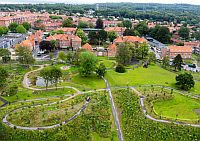 © Thomas A. Christensen - Aarhus Photographic Amateur Club | |
| Events |
<< Read more
<< Read more
|