Σελίδες

Παρασκευή 18 Φεβρουαρίου 2022

NSF Quarterly: News from the Director


header banner
date february 2022
director panch portrait with NSF logo in background

Dear NSF Community, 

Welcome to the NSF Quarterly: News from the Director — each newsletter will spotlight different aspects of the U.S. research enterprise. So, whether you are interested in the latest scientific discoveries, new opportunities to support your research and career, upcoming events, or other creative ways you can engage with NSF, there is something here for you.   

Today, we are seeing STEM talent increasingly distributed across academia, industry, nonprofits, state and local governments, civil society, and communities of practice. To fully harness that talent, NSF is cultivating partnerships across these constituencies, fostering blended teams that work collaboratively to inspire research questions and accelerate the translation of research results to society. For example, I am pleased to share that NSF is partnering with Intel to advance a joint program focused on supporting research and workforce development to advance semiconductor design and manufacturing. We are continually developing partnerships to harness our nation’s STEM talent and make STEM more accessible to all.  

The State of U.S. Science and Engineering 2022 report confirms that there continues to be large disparities in STEM education and student performance across demographic and socioeconomic categories and geographic regions. We are working with our multisector partners to ensure that anyone — from any background or part of the country — who has the talent or desire to go into a STEM career is given the opportunity to do so. To that end, NSF is investing in people and programs that strengthen pathways into STEM fields, prepare a diverse workforce, and foster communities of inclusivity and mentorship. In fact, NSF and the White House Office of Science and Technology Policy recently announced a national strategy to ensure the U.S. remains a global leader in quantum information science and technology by engaging our youth early on in quantum education.  

In our inaugural edition, I want to share with you some of our programs focused on ensuring accessibility and inclusivity in STEM. I strongly believe the future depends on bringing out domestic talent in full force. We are going to accomplish unbelievable things in the coming years, and every big breakthrough and leap forward is going to be made possible because we are investing in people and strengthening our community by making it more inclusive. 

panch circle portrait in jpeg


Sethuraman Panchanathan
Director, U.S. National Science Foundation

must read banner

I’ve been there. Fighting stereotypes in the world of science. 

The insidious negative effects of racist stereotypes on African Americans’ academic performance was described in The Atlantic in 1999 by former National Science Board member and social psychologist Claude Steele in “Thin Ice: Stereotype Threat and Black College Students.” The research that Steele referred to throughout the article was conducted during the 1990s and published in several well-respected peer reviewed outlets. It made a splash and spawned an entire branch of research on the various ways that negative stereotypes deleteriously impact their targets. Read more ... 


Research from the field of science and technology studies offers strategies for broadening participation in STEM

How is scientific knowledge created? How does a scientist's identity shape the results and interpretation of their research? What are the social and cultural impacts of how scientific knowledge is shared with the public and policymakers? What are the relationships between scientific research and ethics, laws and government? 

These are just a few of the questions currently being asked by researchers in the field of science and technology studies, or STS, that could help point the way forward in developing a more inclusive and accessible scientific enterprise. Read more ...


GovExec Daily: The NSF Director Says Science Is Leading the Way 

The role of science in government has ebbed and flowed throughout the history of the U.S., but it has undoubtedly been integral since the National Science Foundation was formed in 1950. As innovation and scientific progress moves forward in the 21st century, NSF’s mission to support science research and education becomes that much more important. Dr. Panchanathan joined the GovExec Daily podcast to discuss the future of U.S. science and innovation and NSF’s efforts to promote STEM education and to unlock the potential in all American communities. Listen to the podcast …


Sugar-coated strip advances COVID-19 testing

Researchers at the University of North Carolina at Chapel Hill and University of California San Diego are taking advantage of the coronavirus' sweet tooth in the design of a sugar-coated COVID-19 test strip effective at detecting known variants.  

In the next few weeks, the U.S. National Science Foundation-funded scientists will determine if the self-test known as GlycoGrip can detect infections caused by the omicron variant, too. Read more ...


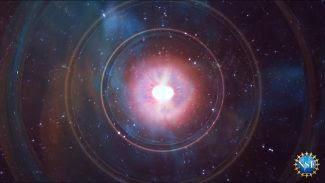
Gemini South telescope captures image of Chamaeleon Infrared Nebula

The Chamaeleon Infrared Nebula is an outflow of gas that resides in the larger Chamaeleon I dark cloud (one of the closest star-forming regions of the Milky Way), and adjacent to the Chamaeleon II and Chamaeleon III dark clouds. These three dark clouds — a type of nebula so dense that it obscures light — are known collectively as the Chamaeleon Complex, a large area of star formation.

The young, low-mass star that powers the nebula is obscured by a dark vertical band and streams of gas that tunnel through the interstellar cloud that formed the star. Light from the star bounces off the tunnel walls, creating the wispy appearance of the nebula. Read more ...


Lizard lungs could be model for biotechnology design

Researchers at Princeton University studied the surprisingly simple and efficient lung development of lizards. The study, partially funded by the U.S. National Science Foundation, is the first to examine the development of a reptile lung. Insights from the research, published in Science Advances, could lead to innovations in artificial lung design and development.

Unlike human lungs that develop over months and years, the brown anole lizard lung develops in mere days through a simple mechanical process. As fluid fills the developing lung, the inner membrane pushes out against smooth muscle tissue, separating the muscle. Read more ...


New data infrastructure initiative will accelerate the advancement and impacts of social and behavioral research

Data-intensive scientific research on human behavior and society can help improve community resilience to natural disasters, avoid supply chain disruptions and accurately predict infectious disease outbreaks. However, researchers in many disciplines have faced obstacles like incompatible data standards, missing or error-filled information, and technical difficulties in managing large data sets. Read more ...


NSF grantees try to turn silver into gold

Luge was first competed at the Olympics in 1964 and requires athletes to barrel down an ice track on small sleds accelerating to speeds of nearly 90 mph. Traditionally, lugers design and build their own sleds, often through trial and error.

Now the U.S. National Science Foundation is supporting Clarkson University engineering professors in their work to test new scientific approaches that could improve the performance of U.S. luge sleds. At the same time, they are training the next generation of STEM students in unsteady aerodynamic design. After winning the first men's singles medal -- a silver -- in 2018, U.S. sights are set on winning gold this February in Beijing. Read more ...


Want more? From Earth’s poles to black holes, read more NSF stories about transforming the world through science.


whats coming up banner

National Science Board Meeting

NSB NSF dual logo

The National Science Board (NSB) will meet virtually to address science and engineering policy issues relevant to the National Science Foundation (NSF). A panel on partnerships to foster innovation across the country, NSF initiatives to promote diversity, equity, inclusion and accessibility, and a discussion with the Director of DARPA are on the agenda.

View the meeting on YouTube: Day 1  |  Day 2

When: February 23 – 24, 2022 
Virtual

New Approaches to Representing Women in Science: In Conversation with Leila McNeill, Amanda Phingbodhipakkiya, and Anna Reser

mural

Lacey Baradel, NSF historian on detail to the National Portrait Gallery, will moderate a conversation between two historians of science and an artist who focuses on portraits of women in science to discuss new strategies and approaches for representing women in the history of science. Join NSF and the National Portrait Gallery for this special conversation by registering to attend

When: March 22, 2022 at 5:00 p.m. EST
Virtual


Image Caption: Amanda Phingbodhipakkiya's We Are Multitudes mural in Washington DC, one of 10 murals in her FINDINGS series that celebrates women and science, appearing in cities across the United States. The mural was inspired by the research of astrophysicist Dr. Ayana Arce based at Duke University and depicts two women of color reaching for each other amidst the flurry of a proton-proton collision. It is located at 1501 HARRY THOMAS WAY NE, WASHINGTON, DC 20002.

Bioeconomy Distinguished Lecture: Pavel Kabat, PhD, Secretary-General of the International Human Frontier Science Program (HFSPO)

portrait of pavel

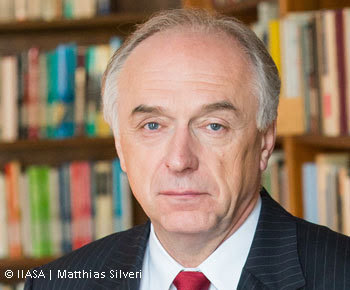
Pavel Kabat, PhD, former Chief Scientist and Research Director of the World Meteorological Organization and co-recipient of the 2007 Nobel Peace Prize along with other authors of the Intergovernmental Panel on Climate Change, will present a virtual Distinguished Lecture as part of NSF’s Bioeconomy Distinguished Lecture Series. Dr. Kabat will discuss mathematical approaches to understanding and predicting climate change. The lecture will be streamed on YouTube. More information on the series can be found on NSF.gov.

When: April 28, 2022 at 9:30 a.m. EST
Virtual

Chat with a Marine Biologist in Antarctica

marine biologist

Did you miss our event with marine biologists in McMurdo Station, Antarctica?

Watch the recording!


Search and save the date for other upcoming NSF events today


engage with us banner
NSF speakers bureau

NSF Speakers Bureau

Our science-loving staff want to share their passion and knowledge with you. NSF speakers offer a wealth of knowledge and subject matter expertise in a broad range of science, engineering and STEM research and education topics. Request an NSF speaker to inspire your audience at your next event today! 


scientist selfie

Scientist Selfie

Celebrate the wonder and work of scientists and engineers who transform the world for the better every day in NSF's video series, Scientist Selfie. Get inspired by a few of those STEM game-changers, and who knows, maybe one day you’ll be one of them!


husk coloring page

New Polar Coloring Pages

NSF is excited to release six new coloring pages. Download the Arctic and Antarctic sets today!


NSF virtual background

Are you using one of our virtual backgrounds?

NSF-supported research impacts nearly every field of science and engineering. NSF's influence reaches from the ends of the Earth to the depths of the oceans and to space and beyond. Our Multimedia Gallery has some of the most stunning images from NSF’s research legacy. We have pulled some of the most beautiful gallery images for you to use as a virtual background.

opportunities banner

Del Mar College microbiology students transfer antibiotic-resistant cultures in the college lab.

Broadening Participation in Computing 

The Broadening Participation in Computing program, or BPC, aims to significantly increase the number of U.S. citizens and permanent residents receiving post-secondary degrees in the computing disciplines and encourage participation of underrepresented groups in the discipline. These groups may include women, persons with disabilities, Blacks and African Americans, Hispanics, American Indians, Alaska Natives, Native Hawaiians, and Pacific Islanders. The BPC program seeks to engage the computing community to develop and implement innovative frameworks and strategies to improve student recruitment and retention through undergraduate and graduate degrees. Projects that target stages of the academic pipeline through faculty ranks are encouraged. All BPC projects must have the potential for widespread, national impact. Due Date: Jan. 19, 2023 

New, expanded Broadening Participation in Engineering program 

The Broadening Participation in Engineering program seeks to support not only research in the science of broadening participation and equity in engineering, but also collaborative endeavors which foster the professional development of a diverse and well-prepared engineering workforce as well as innovative approaches to building capacity through inclusivity and equity within the engineering academic experience. Target Date for two new tracks (Tracks 3 and 4): Nov. 16, 2022. Proposals will be accepted at any time for BPE Tracks 1 and 2. 

Building Research Capacity of New Faculty in Biology  

The Building Research Capacity of New Faculty in Biology program focuses on enhancing research capacity and broadening participation of new biology faculty at minority-serving institutions, predominantly undergraduate institutions, and other less research-intensive institutions. Awards will provide the means for new faculty to initiate and build independent research programs by enhancing their research capacity. These projects might also include biology-focused research collaborations among faculty within the same institution, across peer-, or research-intensive institutions, or with industry or other non-academic partners that advance the candidate’s research program. Upcoming Proposal Windows: June 1 to June 30, 2022, and Dec. 1 to Dec. 30, 2022 

Community College Innovation Challenge 

The American Association of Community Colleges, in partnership with NSF, has launched a national competition where community college student teams, working with a faculty or administrator mentor, use STEM to innovate solutions to real-world problems. The competition seeks to foster the development of students’ innovation, communication, and entrepreneurial skills. Submissions due by 11:59 p.m. PDT on March 30, 2022. 

Facilitator of Polar Science Technology, Engineering, Arts and Mathematics 

NSF seeks proposals for a facilitator to manage a Polar Science, Technology, Engineering, Arts and Mathematics, or Polar STEAM, initiative. This new initiative supports writing and artistic projects specifically designed to increase the public’s understanding and appreciation of the Antarctic and the human endeavors on the southernmost continent. The initiative supports educators, both formal and informal, to travel to the Antarctic and Arctic to work collaboratively with researchers. Polar STEAM will promote diversity, equity and inclusion in polar science programs and allow for participation by a broader range of educators. Due Date: Feb. 25, 2022 

Leading Cultural Change Through Professional Societies of Biology  

The Leading Cultural Change Through Professional Societies of Biology program aims to advance diversity, equity and inclusion in biology at scale by leveraging the leadership, broad reach, and unique ability of professional societies. These societies are uniquely positioned to help change the culture in their disciplines through: publishing journals; fostering scientific discussion and debate; broadening membership (including membership from academia, government agencies, and private businesses); hosting large scientific meetings that can serve as networking and professional development opportunities; and electing leaders that greatly influence views and norms within a discipline. As NSF recognizes that disciplines and societies may be at different points in assessing and addressing their culture, the program has three tracks — Evaluation, Design and Plan, and Implementation. Due Date: July 1, 2022 

Racial Equity in STEM Education 

Persistent racial injustices and inequalities in the United States have led to renewed concern and interest in addressing systemic racism. NSF’s Directorate for Education and Human Resources seeks to support groundbreaking and potentially transformative projects addressing systemic racism in STEM. Proposals should advance racial equity in STEM education and workforce development through research (both fundamental and applied) and practice. Core to this funding opportunity is that proposals are led by, or developed and led in authentic partnership with, individuals and communities most impacted by the inequities caused by systemic racism. Target Date: March 22, 2022 

Scholarships in Science, Technology, Engineering and Mathematics 

The NSF Scholarships in Science, Technology, Engineering and Mathematics program supports domestic low-income students enrolled in associate, baccalaureate or graduate degree programs in STEM fields of strategic importance to the U.S. The program was recently expanded to include disciplines within the social, behavioral and economic sciences. Due Date: Feb. 22, 2022 

National Medal of Science – Call for Nominations 

The National Medal of Science is the premier award for American scientists and engineers. It is the highest recognition the nation can bestow for outstanding cumulative contributions to knowledge or sustained impactful work in the fields of biology; computer and information science; education and human resource development; engineering; geosciences; mathematical and physical sciences; and social, behavioral and economic sciences. Given by the President of the United States during a ceremony at the White House, this medal has been awarded to 506 pioneering individuals. Nominations and three letters of support must be submitted by May 20, 2022. 

NSF INCLUDES National Network Shared Measures Platform – Call for Contributions 

This new platform will document the overall reach of STEM broadening participation projects. The site will serve as a platform for sharing results and learnings across a range of STEM broadening participation outcomes and describing the progress that National Network members are making to operationalize elements of collaborative infrastructure. Visit the platform to learn more about how broadening participation projects can contribute data. 

START: Building Community College Student Technical Capabilities via University Partnering with Industry  

The Skills Training in Advanced Research and Technology, or START program, enables faculty, graduate students and postdocs at university-industry research centers and their industrial advisory board members to include, train, and mentor community college students and faculty in cutting-edge, use-inspired research. Working closely together, university, community college, and industry partners learn from each other and benefit from the ideas, innovations and skills each brings to the table. To get involved or for more information on a new supplemental funding opportunity, check out the START Dear Colleague Letter. Target Due Date: April 15, 2022 

Expanding Capacity in Quantum Information Science and Engineering

The NSF Expanding Capacity in Quantum Information Science and Engineering (ExpandQISE) program aims to increase research capacity and broaden participation in Quantum Information Science and Engineering and related disciplines through the creation of a diversified investment portfolio in research and education, leading to scientific and engineering breakthroughs and securing a talent pipeline in a field where workforce needs of industry, government and academia continue to outgrow the available talent. Letter of Intent Due Date for Track 2 proposals: April 01, 2022. Full Proposal Deadline: Track 1 proposals: June 03, 2022, Track 2 proposals: May 06, 2022

Partnerships in Astronomy & Astrophysics Research and Education

The objective of PAARE is to improve the quality and environment of astronomy and astrophysics research and education by stimulating the development of formal, long-term partnerships that provide authentic pathways into the research enterprise and broaden the participation in astronomy from underrepresented communities. Partnerships must substantially involve institutions seeking to create opportunities for student and faculty research that will increase the recruitment, retention, and success of these individuals. Partnerships will build or strengthen research capacity, as well as foster a diverse, inclusive, and equitable environment for astronomy and astrophysics research and education at the partnering institutions. Due Date: February 07, 2022


Search for more NSF funding opportunities in your field and check out NSF 101, our informational series for the science and engineering research community. NSF 101 answers commonly asked questions for applicants who might be new to applying for NSF funding opportunities and want to know more about how to communicate with NSF.  


5 tips on how to work with an NSF program officer

Are you an undergraduate student thinking about how to get funding for graduate school? An early-career researcher looking to launch your new lab? An established researcher with dozens of years of funding from NSF under your belt? Whatever the phase of your research career, it is a good idea to reach out to an NSF program officer as the first step in the application process. Read more ...

The Graduate Research Fellowship Program

Is graduate school in your future? Pursuing a PhD or master’s degree in science or engineering is an intellectual journey, opening doors to many career paths in academia, industry and beyond. The U.S. National Science Foundation can help fund your graduate education and kick-start your career. The Graduate Research Fellowship Program, or GRFP, is one of NSF’s oldest programs. Fellowships were first awarded in 1952 and predate NSF’s first awards for research grants. Read more ...