Dear maria, In today's edition we discuss the divergence in vaccine access between advanced economies and emerging and developing economies, and renew our focus on Special Drawing Rights. We look at the impact of investment in public infrastructure, and how to achieve inclusion economics. And finally, we consider a key meeting which led to the end of the gold standard, and profile some of the most influential women in the field of economics. Weekend Read will take a break for the summer and will be back on September 10th. But before bidding you a good vacation, we leave you with this:  COMING TOGETHERDifferences in vaccine access, and the ability to deploy policy support are creating a growing divergence between advanced economies from many emerging market and developing economies, warn Vitor Gaspar and Gita Gopinath. Faced with high deficits and historic levels of debt, countries with limited access to financing are walking a fiscal tightrope between providing adequate support and preserving financial stability. Without resolute measures to address this growing divide, COVID‑19 will continue to claim lives and destroy jobs, inflicting lasting damage to investment, productivity, and growth in the most vulnerable countries. The pandemic will further disrupt the lives of the most vulnerable, and countries will see a rise in extreme poverty and malnutrition, shattering all hope of attaining the Sustainable Development Goals. Narrowing the pandemic divide requires collective action to boost access to vaccines, secure critical financing, and accelerate the transition to a greener, digital, and more inclusive world. Interested in learning more? Read the full blog here. 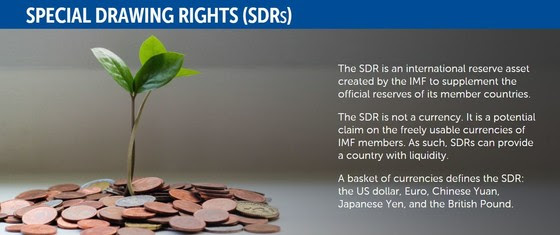 Last week, the Board of Governors of the IMF approved a general allocation of Special Drawing Rights (SDRs) equivalent to US$650 billion (about SDR 456 billion). A move which will help boost global liquidity. But what exactly is an SDR? How will it increase global liquidity? And how could an SDR allocation help low-income countries? The answers to these questions and more can be found here 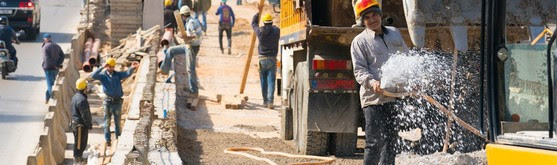 PUTTING PUBLIC INVESTMENT TO WORKFor countries on the path to recovery, reviving economic activity is a major priority. And what better way to support a come-back than by creating jobs? Our new IMF staff research shows that when governments spend on infrastructure, they create many new jobs, writes Mariano Moszoro.  Drawing on a 19-year dataset of over 5,600 construction companies from 27 advanced economies and 14 emerging market economies, we use an innovative approach to measure the direct employment effect of $1 million of infrastructure spending by country income group and sector—electricity, roads, schools, hospitals, and water and sanitation. Our latest chart of the week shows average estimates, by sector, of the number of jobs that additional investments create along the supply chain. Read the full blog here.  THREE DAYS AT CAMP DAVID: HOW A SECRET MEETING IN 1971 TRANSFORMED THE GLOBAL ECONOMYIn a book review for F&D, the IMF's resident historian, Atish Rex Ghosh, considers a new publication by Jeffrey E. Garten about a seminal meeting in 1971 called by then-U.S. president, Richard Nixon, when he summoned his leading financial officials to a meeting at the presidential retreat, Camp Davivd, over the weekend of August 13–15. The meeting was instrumental in Nixon's decision to close the “gold window” and led to the collapse of the Bretton Woods system of fixed exchange rates. "It would be trite to say that Garten’s book belongs on every international economist’s bookshelf. It doesn’t, writes Ghosh. "It belongs on their bedside tables as light, but thoroughly enjoyable, reading," he adds. Interested in reading the full review? Check it out here.  INCLUSION ECONOMICSInclusion doesn't just happen; it takes policies that intentionally serve the very specific purpose of ensuring inclusion. That is the focus of Rohini Pande's work these days as the Director of Yale's Economic Growth Center. Pande is one of the most influential development economists of her generation, always looking for ways for the poor to increase their influence and claim their fair share of growth. She speaks with journalist Rhoda Metcalfe about how tackling poverty depends less on direct aid and more on creating effective democratic institutions so that vulnerable populations can push their representatives to implement redistributive policies. Listen to the podcast here.  IMF SUMMER READS A book is a must, as you head off to visit family and friends, or take time off during the summer to unwind. A good book can bring in new thinking and perspective from the past. It can also inspire and motivate. We suggest some additions to your summer reading list, and possibly some food for thought, based on a selection of recent book reviews by our editors at Finance & Development (F&D). Click here for the full list WOMEN IN ECONOMICSWomen remain underrepresented in economics, yet many have made an outsized impact on the field. Whether it’s in working to eliminate poverty, reinventing development economics, examining social safety nets, or improving democratic institutions, Finance & Development magazine has regularly highlighted the contributions made by women economists. 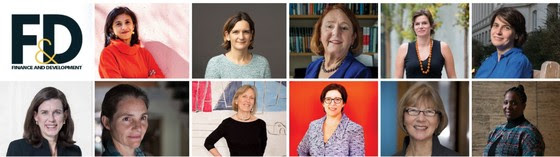 In F&D’s People in Economics series, the work of women economists has featured prominently. To add to your summer reading list, we list some profiles from recent years of the important thinkers who are leaving a mark. Click here for the full article. IMF AROUND THE WORLDThe IMF issued a report which considered a request by Cameroon for a three-year arrangement, while IMF staff also concluded their regular Article IV consultations with, among others, Antigua and Barbuda and the Philippines. The IMF issues a Disaster Resilience Strategy for Dominica, the country with the highest GDP losses to climate-related natural disasters. Also, a report which considers areas of fiscal risk vulnerabilities and reform priorities for the Republic of Estonia. Public financial management (PFM) consists of all the government’s institutional arrangements in place to facilitate the implementation of fiscal policies. In response to the growing urgency to fight climate change, “green PFM” aims at adapting existing PFM practices to support climate-sensitive policies RESPONDING TO THE CRISIS: To date, 85 countries have received more than $113 billion in financial assistance in response to the economic impact of the COVID-19 crisis. Find out more in our lending tracker, which visualizes the latest emergency financial assistance and debt relief to member countries approved by the IMF’s Executive Board. Overall, the IMF is currently making about $250 billion, a quarter of its $1 trillion lending capacity, available to member countries. Looking for our Q&A about the IMF's response to COVID-19? Click here. We are also continually producing a special series of notes—about 100 to date—by IMF experts to help members address the economic effects of COVID-19 on a range of topics including fiscal, legal, statistical, tax and more. HAVE YOUR SAYThank you again very much for your interest in the Weekend Read. We really appreciate your time. If you have any questions, comments or feedback of any kind, please do write me a note. We would love to hear from you. Sincerely, Hyun-Sung Khang
Deputy Editor, IMF Weekend Read
HKhang@imf.org | 


